Peacebuilding in Colombia: Lessons from the margins
Abstract
The article examines how transitional justice in Colombia plays out in the municipalities that were affected the most by the internal armed conflict - places where courts are distant, officials rotate frequently, and armed groups still influence everyday life. Although the 2016 Peace Agreement established an ambitious and comprehensive national system for truth, justice, and reparations, many communities in rural municipalities continue to face the same structural barriers that shaped the conflict itself: racialized exclusion, weak state institutions, and limited access to legal protection. Drawing on scholarship and reports that document these local realities, decolonizing transitional justice emerges as a task that begins with paying close attention to how people actually navigate the justice system in these regions. In this landscape, civil society organizations play a crucial role: travelling to remote communities, accompanying victims through institutions, supporting women facing gender-based violence, and challenging the discriminatory treatment of Afro-Colombian and Indigenous communities. Their efforts show how justice is being redefined from the ground up, not as an abstract ideal but as a practical negotiation shaped by territory, inequality, and community mobilization.
Keywords: Decolonisation, Transitional justice in Colombia, CSOs, Local justice, Reconciliation, access to justice
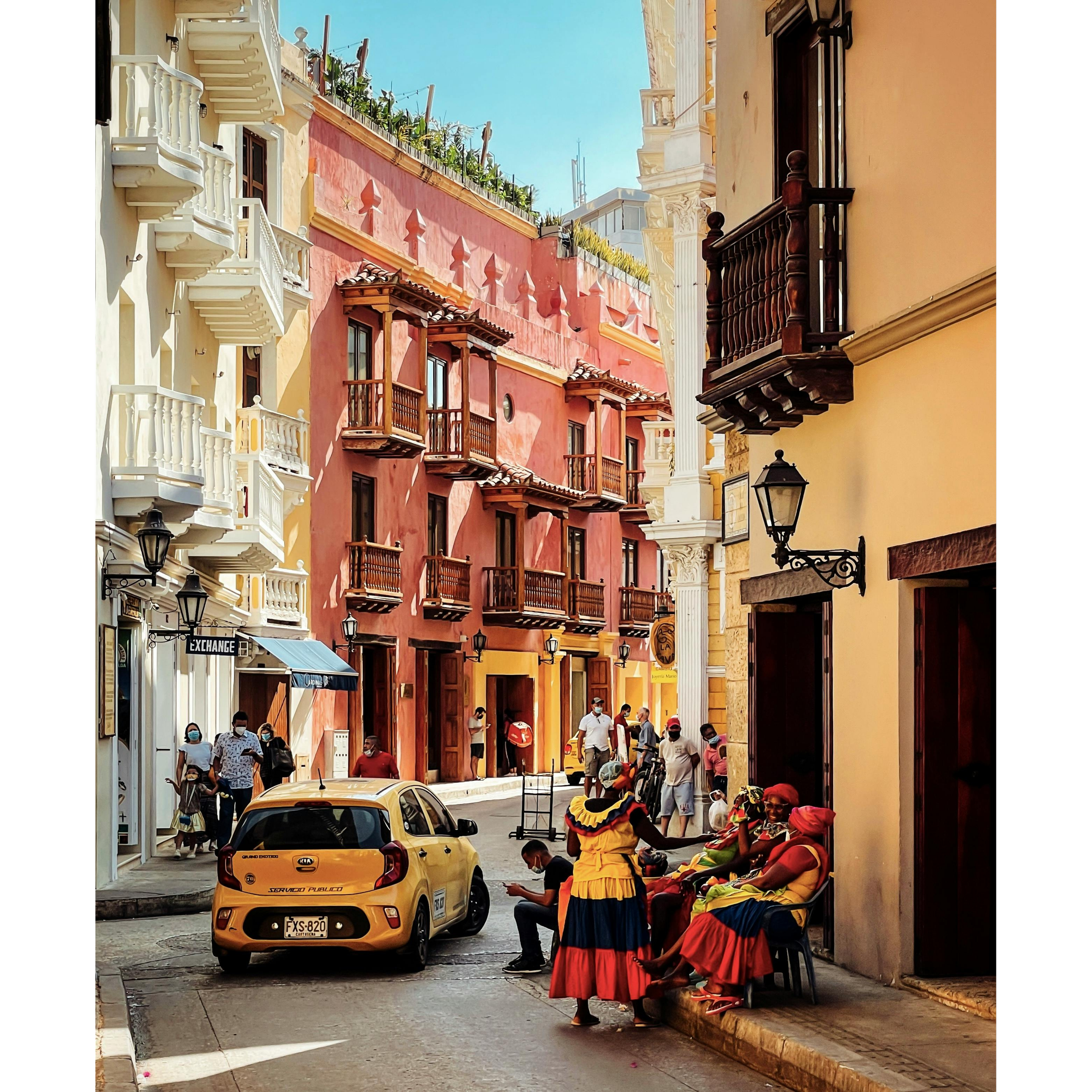
Colorful Street Scene in Cartagena, Colombia. Source: Diego HG via Pexels
Introduction
Efforts to transform Colombia’s violent past have long been framed through the language and tools of transitional justice. Yet, for many communities living far beyond Bogotá, ‘transition’ has never felt like a clean break from conflict. Instead, it has been a slow, uneven negotiation shaped by geography, race, historical neglect, and the lived realities of state absence. For these communities, the vocabulary of truth, justice, and reconciliation - so often circulated in international spaces - only becomes meaningful when it speaks to the struggles of those most affected.
This is where the question of decolonization becomes urgent. Decolonizing transitional justice is not only about exposing the colonial roots of violence or critiquing imported justice models. It is also about shifting the center of gravity from top-down state and international frameworks to the people and territories whose experiences have traditionally been relegated to the margins. Colombia, with its layered history of colonial dispossession and contemporary armed conflict, offers a good example of why this shift matters.
Colonial legacies and the limits of “transition”
To understand why a decolonial perspective is necessary, it is useful to recall that Colombia’s conflict did not emerge from a vacuum. Scholars highlight its roots in Spanish colonial domination, entrenched inequality, and patterns of racialized exclusion that persist today (Olarte-Sierra, 2022). When guerrilla groups like the FARC-EP and ELN emerged in the 1960s, and paramilitary structures expanded in the 1980s, they did so in a society already marked by historical injustice and a profoundly uneven state presence (González, 2004; Rivera, 2007). The conflict deepened longstanding inequalities, particularly in regions home to Afro-Colombian and Indigenous communities.
The 2016 Final Peace Agreement - celebrated internationally as a landmark deal - promised a comprehensive approach to transitional justice, combining restorative and retributive measures to address systematic abuses and rebuild institutions (Government of Colombia & FARC-EP, 2016; United Nations, 2010). Yet, Colombia’s transitional justice process remains destabilised by realities on the ground (Shaw, Waldorf & Hazan, 2010). In many municipalities across Nariño, Putumayo, Chocó, Magdalena, Sucre, and Cauca, the problem is not merely one of ‘post-conflict’ reconstruction; it is the enduring experience of being structurally excluded from the state. García-Villegas and Espinosa (2013) call this “institutional apartheid” - a striking term that captures how peripheries have long been denied the protections and rights promised by the center.
Where the state is weak, transitional justice is weakened as well. In many rural communities, people hold rights in theory but find no reliable doorway through which to assert them. Courts and legal offices are distant or absent, discriminatory practices discourage engagement, and armed groups often step into the vacuum, imposing their own forms of authority and conflict resolution (OECD, 2020; Human Rights Watch, 2021b). In the end, justice becomes less a guaranteed entitlement than a difficult pursuit shaped by geography, risk, and a fragmented institutional presence.
Decolonization, in the Colombian context, therefore begins with recognising whose experiences continue to be structurally marginalised, even within the country’s peacebuilding efforts.
Local Justice as a decolonial battleground
Transitional justice cannot be meaningfully implemented when local justice systems are weak or discriminatory. The deficits in Colombia’s municipal institutions are not simply logistical challenges; they expose deeper, historical patterns of state-building that privileged economic centers over rural, Indigenous, and Afro-descendant regions (García-Villegas, 2008).
In many municipalities:
Courts and legal offices are physically distant from rural settlements.
Victims lack legal literacy to understand their rights.
Corruption and clientelism distort local governance (Gutiérrez, 2013).
Security conditions discourage engagement with state institutions (UN, 2021).
Under these conditions, the right to justice risks becoming a matter of proximity, networks, and safety rather than a universal guarantee.
Decolonizing transitional justice in Colombia therefore requires addressing the geography of justice, instead of trusting that national mechanisms will naturally filter down to local realities. State-led reforms - such as Justice Houses, special Indigenous jurisdictions, and the Ten-Year Justice Plan - represent important commitments to this goal, but remain unevenly implemented and insufficiently resourced (OECD, 2020). Many of these programs rest on the assumption that municipalities possess an institutional strength and social trust they simply do not have (García-Villegas & Espinosa, 2015).
In this landscape, transitional justice cannot succeed by institutional design alone. Scholars argue that it should rather be rebuilt from the bottom up, grounded in the specific histories, cultures, and challenges of each territory. This disconnect between national ambition and local capacity has created a vacuum that civil society organizations have increasingly stepped in to fill - translating rights into practice, supporting communities the state struggles to reach, and quietly redefining what justice looks like on the ground.
Civil society as a decolonial actor from below
Civil society organizations (CSOs) in Colombia play a key role in decolonizing justice from below, not through theoretical commitments, but through deeply practical, community-rooted work. Remarkably, civil society in the country is historically resilient and diverse - ranging from Afro-Colombian and Indigenous organizations to human rights collectives, women’s associations, labour unions, and victims’ movements (Sánchez-Garzoli, 2016). These groups have long demanded inclusion in peace processes (Valencia-Agudelo & Villarreal-Miranda, 2020) and have contested state policies that inadvertently protect perpetrators while leaving victims to navigate justice alone (Zambrano & Gómez Isa, 2013). Their initiatives today directly respond to the local justice deficiencies that have the potential to undermine transitional justice processes.
Some organizations focus on strengthening legal knowledge in places where the state rarely reaches. They travel to remote regions, holding legal workshops and community sessions that explain rights, clarify procedures, and accompany people through complex bureaucratic processes. By doing so, they help transform legal knowledge from something concentrated in urban centers into a resource that rural communities can use to advocate for themselves. This type of work improves access to justice and challenges the idea that expertise must flow one-way from the center to the periphery. Other groups concentrate on building the confidence and autonomy of communities that face indifference from local authorities. In areas marked by corruption or persistent insecurity, they provide training and support that enable residents to confront institutional failures, document abuses, and insist on proper treatment from state officials. Their efforts help redistribute power in everyday interactions with the justice system, making it harder for discriminatory practices to remain unchallenged.
Women’s organizations represent another crucial strand of this decolonial work. In many conflict-affected regions - particularly those with large Afro-Colombian and Indigenous populations - women encounter acute barriers when seeking justice, including institutional bias, stigma, and procedural hurdles. Some civil society groups respond by offering psycho-legal support, accompanying women through legal processes, and pursuing strategic litigation in emblematic cases. Others run literacy and empowerment programs that help survivors understand their rights and build collective strategies for navigating institutions.
A similar dynamic is visible in organizations organized by and working with Afro-Colombian and Indigenous communities more broadly. These communities are disproportionately affected by both conflict-related harms and the chronic failures of municipal justice systems (García-Villegas & Espinosa, 2013a). Complaints of racial discrimination often go unanswered or are dismissed without adequate investigation. Civil society groups respond by documenting discriminatory practices, demanding accountability from regional authorities, and advocating for the recognition of collective rights. In doing so, they push transitional justice to acknowledge not only wartime abuses but also the structural racism that has shaped who receives justice and who is left waiting.
These different strands of civil society work expand the meaning of transitional justice. They move it beyond formal mechanisms and into the spaces where people actually encounter the state - or its absence. Their work shows that decolonization does not occur through rhetoric alone; it is built through daily acts of accompaniment, mobilisation, and resistance that make justice tangible for those historically pushed to the margins.
Why this matters for peacebuilding
At its core, the 2016 Peace Agreement imagined a long-term process capable of transforming the social and institutional fabric of the country. But without strong local justice systems and meaningful community participation, transitional justice risks remaining shallow or uneven. Civil society organizations help prevent this hollowing-out of justice by rebuilding trust in places where the state lacks legitimacy, by encouraging citizens to engage with formal mechanisms, and by mitigating the influence of illegal armed actors who fill the void when institutions fail.
Their work shows that peacebuilding is not simply a matter of implementing nationally designed programs. It is a continuous negotiation conducted in remote villages, Indigenous resguardos, conflict-scarred municipalities, and Afro-Colombian territories - spaces where the presence of the state is often felt least but where the success of peace is most essential. In these settings, civil society does not merely deliver services; it redefines what justice can be, pushing against the historical hierarchies that have long shaped Colombia’s territorial landscape.
Conclusion
Decolonizing transitional justice in Colombia requires more than incorporating marginalised voices into existing mechanisms. It demands rethinking the foundations of how justice is conceived, delivered, and legitimised. It requires acknowledging the colonial legacies that continue to organize the distribution of rights and resources, and recognising that communities at the periphery hold knowledge and practices essential to any genuine transition.
Colombia’s CSOs - legal brigades in isolated settlements, women’s collectives confronting discrimination, Afro-Colombian and Indigenous movements challenging structural racism - are already leading this transformation. Their efforts show us that decolonization is not a theoretical horizon but a daily practice built through accompaniment, training, mobilisation, and community solidarity.
By returning agency to those historically excluded, these initiatives reveal the full meaning of a decolonial approach: justice not defined by the center but shaped by the people and territories that have borne the highest costs of war. In doing so, they offer a vision of peacebuilding that is more inclusive and more sustainable, as rooted in the lived experiences and aspirations of Colombia’s most affected communities.
Bibliography
García-Villegas, Mauricio. Normas de papel: La cultura del incumplimiento de reglas. Siglo del Hombre Editores, 2008.
García-Villegas, Mauricio, and Javier Eduardo Espinosa. El derecho al Estado: Los efectos legales del apartheid institucional en Colombia. Dejusticia, 2013.
García-Villegas, Mauricio, and Javier Eduardo Espinosa. Estado, instituciones y ciudadanía en zonas periféricas de Colombia. Dejusticia, 2015.
Government of Colombia and FARC-EP. Final Agreement for the Termination of the Conflict and the Construction of a Stable and Lasting Peace. Bogotá, 2016.
González, Fernán E. “The Colombian Conflict in Historical Perspective.” Accord, vol. 14, no. 2, 2004.
Human Rights Watch. “Left Undefended: Killings of Rights Defenders in Colombia’s Remote Communities.” Human Rights Watch, 10 Feb. 2021, www.hrw.org/report/2021/02/10/left-undefended/killings-rights-defenders-colombias-remote-communities.
Human Rights Watch. “Colombia: Events of 2021.” Human Rights Watch, 10 Dec. 2021,www.hrw.org/world-report/2022/country-chapters/colombia.
Lundy, Patricia, and Mark McGovern. “Whose Justice? Rethinking Transitional Justice from the Bottom Up.” Journal of Law and Society, vol. 35, no. 2, 2008, pp. 265–292.
OECD. OECD Public Governance Scan, Colombia: On Enhancing Administrative Capacity at the Sub-National Level for Better Planning and Open Government. OECD, 2019.
OECD. “Access to Justice for Women Victims of Violence in Colombia.” OECD iLibrary, 11 July 2020, www.oecd-ilibrary.org/sites/00292e14-en/index.html?itemId=/content/component/00292e14-en.
Olarte-Sierra, María Fernanda. “(Un)Doing the Colombian Armed Conflict.” Social Anthropology, vol. 30, no. 3, 2022, pp. 19–37.https://doi.org/10.3167/saas.2022.300303.
Rivera, Eduardo de Jesús V. “Historia del paramilitarismo en Colombia.” História (São Paulo), vol. 26, no. 1, 2007, pp. 134–153.https://doi.org/10.1590/s0101-90742007000100012.
Ruta Pacífica de las Mujeres (RPM). “Movilizaciones.” Ruta Pacífica de las Mujeres, 2022, rutapacifica.org.co/wp/movilizaciones/.
Shaw, Rosalind, Lars Waldorf, and Pierre Hazan. Localizing Transitional Justice: Interventions and Priorities after Mass Violence. Stanford University Press, 2010.
United Nations. “Colombia: Criminal Elements Use Violence and Intimidation to ‘Stamp Out’ Leaders’ Voices.” UN News, 21 Jan. 2021, news.un.org/en/story/2021/01/1082712.
United Nations. Guidance Note of the Secretary-General: United Nations Approach to Transitional Justice. United Nations, 2010.
Valencia-Agudelo, Gloria Dayanna, and Katherine Dayana Villarreal-Miranda. “Participación de la sociedad civil en el proceso de paz con las Fuerzas Armadas Revolucionarias de Colombia – FARC-EP (2012–2016).” Entramado, vol. 16, no. 2, 2020, pp. 238–250.
Zambrano, Luisa, and Francisco Gómez Isa. “Participation of Civil Society in the Colombian Peace Process.” NOREF, 2013.