

Events & Training
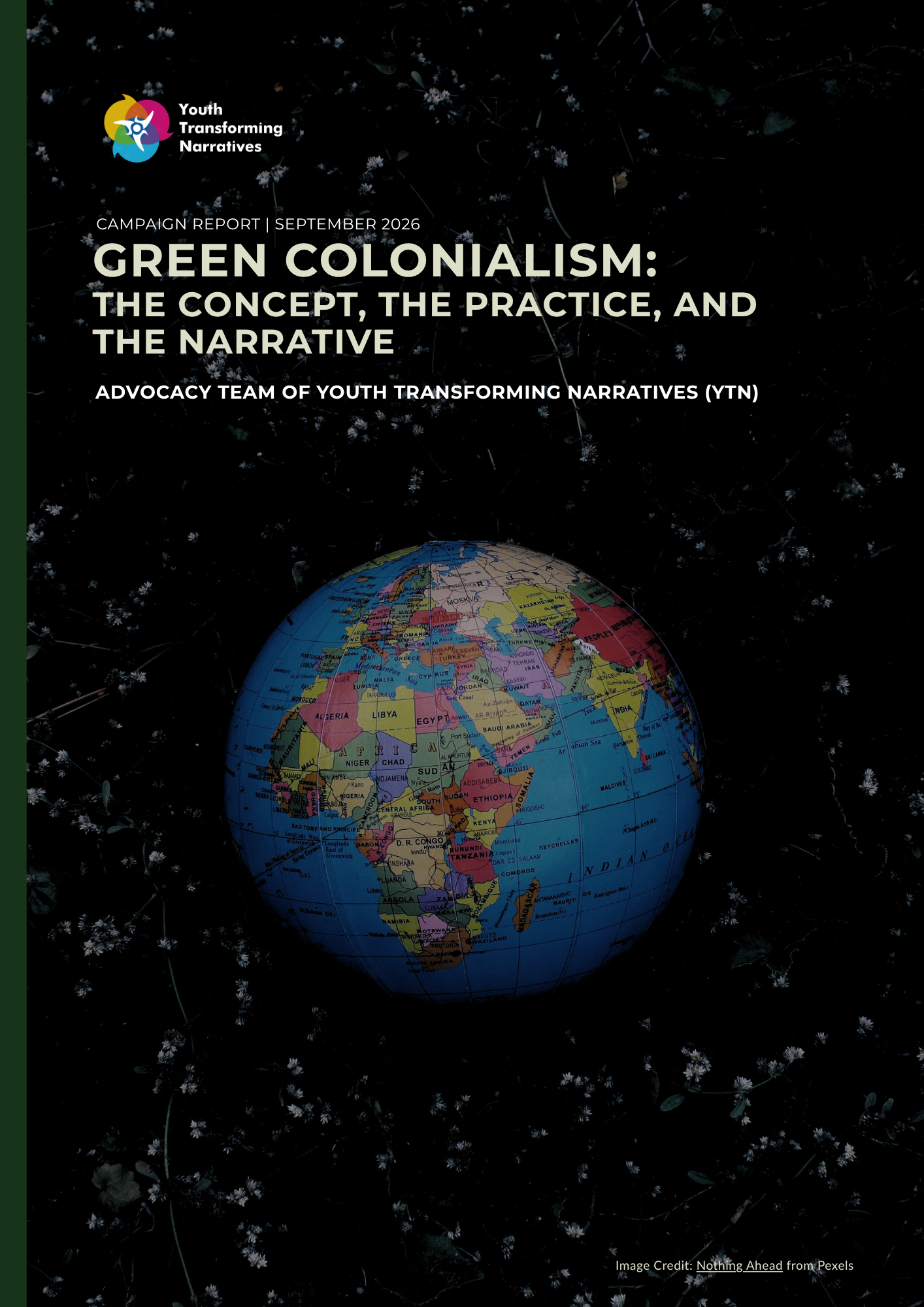
Green Colonialism Digital Advocacy Campaign Launch Event
The term green colonialism is used in contemporary environmental and decolonial scholarship to describe how climate action, conservation, and “green” development can reproduce historical patterns of colonial extraction.
In the supposed interest of mitigating climate change, mines, dams, wind parks, carbon credit schemes, and beyond are being implemented around the world, frequently as mega-projects decided upon without consent and accountability. Local communities are rarely consulted, their land is often classified as 'unoccupied' or "empty", and those who resist are frequently criminalised.
This is what YTN report “Green Colonialism: The Concept, The Pratice and the Narrative” and the tracker #TraceTheGrab intends to document. To demonstrate that these are not isolated cases, but part of a systemic and transnational pattern.
Policy Brief Launch Event: Funding and Power at the UN
The United Nations is currently undergoing one of the most significant reform processes in its history. Through the UN80 Initiative, the organization is seeking to respond to a serious financial crisis by reducing costs, reviewing mandates and restructuring parts of the UN system.
However, debates about efficiency and institutional reform cannot be separated from wider questions of funding and power. The UN’s financial architecture gives a small number of major donor states considerable influence over which programs, regions and policy areas receive funding. These arrangements have developed within an international system shaped by colonial-era inequalities and continue to affect the representation and decision-making power of Global Majority countries.
YTN’s second policy brief, Funding and Power at the UN: A Decolonial Contextualization of UN80 and the UN Funding Architecture, examines these issues by connecting the current UN80 reform process to the longer history of the UN’s governance and funding structures. It considers how voluntary and earmarked contributions shape institutional priorities, how funding shortages affect different UN mandates, and why previous commitments to localize and decolonize international assistance have produced limited structural change.