Protecting Native Communities from Federal Enforcement: Colonial Legal Legacies, Indigenous Rights, and Youth Safety
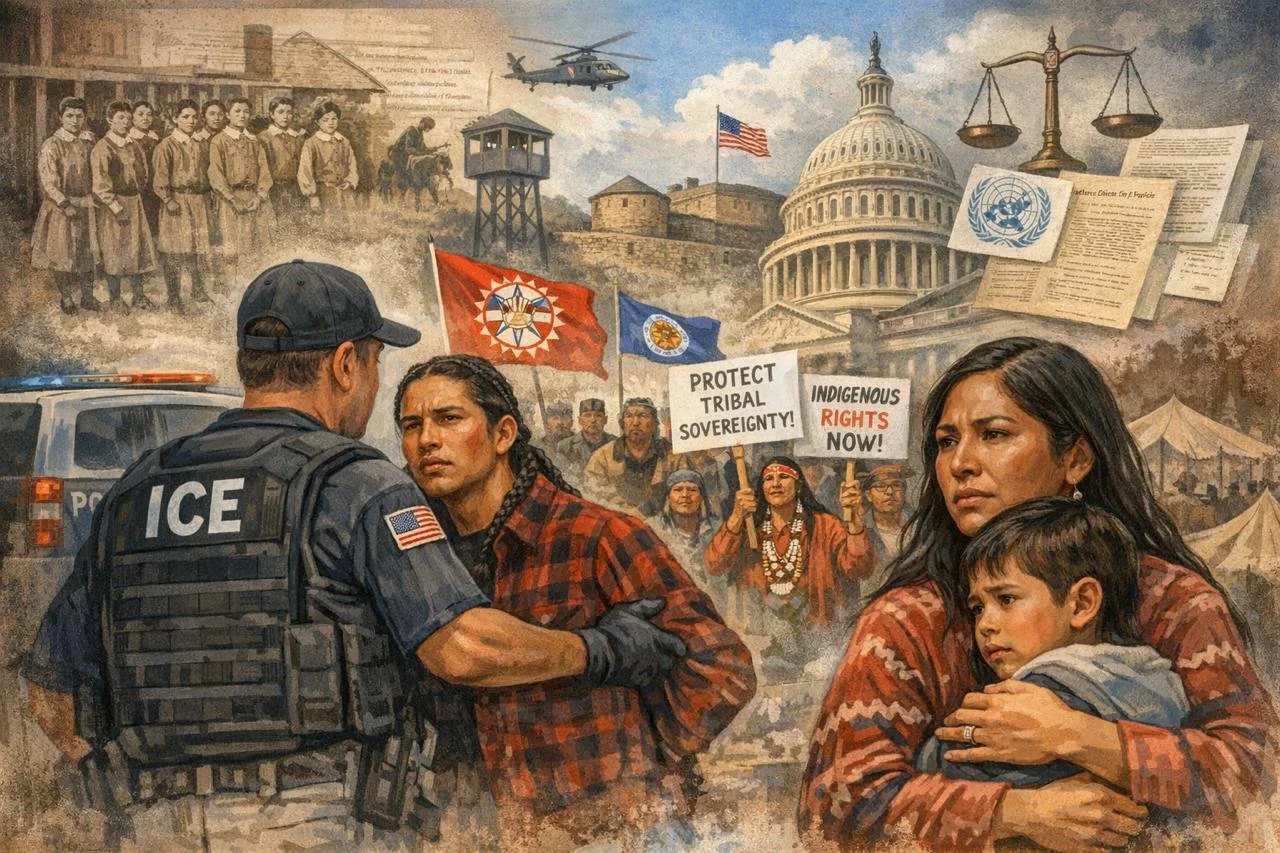
AI-generated.
In January 2026, United States Immigration and Customs Enforcement operations in Minneapolis, Minnesota, resulted in the detention of several Indigenous individuals. Of those included, enrolled members of the Oglala Sioux Tribe, all of whom are U.S. citizens (1). Reports confirm the tribal members were detained during enforcement activities near encampments and urban Native community spaces, with at least one person later released and others held temporarily without just cause (2). During the same enforcement period, Jose Roberto “Beto” Ramirez, a young Indigenous man with ties to the Red Lake Nation, was detained by ICE despite confirming his citizenship and Indigenous identity before being released later (3). These incidents have led to formal protests from tribal governments, Indigenous legal organizations, and state lawmakers, all of whom have stressed that Native peoples are not subject to immigration jurisdiction and should never be considered removable under federal law (4).
Collectively, these events highlight a deeper structural issue: despite their citizenship and treaty rights, Indigenous peoples remain particularly vulnerable to arbitrary state authority—especially within modern national security and immigration enforcement systems. This paper examines how recent events in modern US history are strategically placed within the broader history of U.S. colonial law and policies. Exploring how processes like assimilation, allotment, and imposed citizenship have fractured Indigenous political life and diminished legal protections, with specific impacts on the safety and well-being of Indigenous youth and children, is critical for a sustainable path forward for the next generation of tribal youth (5).
Colonial Legal Foundations and the Limits of Citizenship
From the US- Native treaty era onward, Native nations were recognized—at least formally—as sovereign political entities engaged in government-to-government relationships with the United States. These treaties affirmed Indigenous peoples as self-governing communities with territorial integrity under domestic and international law (6). Yet this recognition was, and continues to be, steadily eroded through unilateral congressional and executive action.
Beginning with the Indian Removal Act of 1830 (7), institutionalized forced displacement and racialized dispossession were federal policy, marking a decisive departure from treaty-based relations. With the late nineteenth century, federal strategy shifted from removal to assimilation. The General Allotment Act of 1887 (8) (Dawes Act) dismantled collective land tenure, fractured tribal governance, and deliberately weakened Indigenous political identity.
Citizenship emerged during this period as a conditional and instrumental legal status. Rather than functioning as a guarantee of rights, citizenship was frequently linked to land allotment and compliance with federal authority. The Indian Citizenship Act of 1924 imposed U.S. citizenship on Native peoples without consent and without dismantling federal plenary power over tribes (9). As a result, citizenship coexisted with continued disenfranchisement, discrimination, and jurisdictional ambiguity well into the twentieth century (10).
This ongoing contradiction—granting citizenship without ensuring full legal protections or respecting Indigenous sovereignty—continues to be key to understanding current enforcement practices impacting Native communities. Without confronting these colonial legacies full on, youth will lack the full participation of their rights as U.S. citizens and be without protection from ICE entering their territories.
From Assimilation to Enforcement: DHS and the Reproduction of Colonial Power
The Minneapolis ICE operations exemplify how these structural failures manifest in practice. Indigenous individuals—some enrolled tribal members and all U.S. citizens—were questioned or detained during immigration enforcement despite clearly asserting their citizenship and tribal affiliation (11). Tribal governments, including the Oglala Sioux Tribe, publicly challenged ICE’s actions and criticized the lack of transparency surrounding the detention and release of tribal members, underscoring the continued erosion of Indigenous political authority within federal enforcement systems (12).
The creation of the Department of Homeland Security (DHS) in 2002 has only added further layers to an already expansive federal enforcement authority on top of these unresolved colonial legal structures. While DHS was established under national security mandates, its immigration enforcement practices often operate without meaningful recognition of Indigenous sovereignty, treaty rights, or tribal citizenship. In doing so, they reproduce long-standing patterns of racialized surveillance and administrative coercion.
Community reporting further documents widespread fear and disruption within urban Native communities, particularly among youth and families, as enforcement activity expanded near encampments, community spaces, and service providers (13). The fact that individuals were processed through facilities associated with Fort Snelling—a site historically used to imprison Dakota people following the U.S.–Dakota War of 1862—adds a powerful symbolic dimension to these events, highlighting the continuity between historical and contemporary forms of state violence against Indigenous peoples (14).
These incidents demonstrate that modern immigration enforcement has become a contemporary vehicle through which unresolved colonial legal ambiguity is operationalized, rendering Native Americans, particularly youth, legally precarious within systems that should, by law, recognize their citizenship and sovereignty.
International Human Rights Obligations and Indigenous Protection
International human rights law provides a clear framework for assessing these practices. The International Covenant on Civil and Political Rights (ICCPR), ratified by the United States, prohibits arbitrary detention, discrimination, and unequal treatment before the law (15). These obligations apply irrespective of domestic enforcement priorities or administrative discretion.
The United Nations Declaration on the Rights of Indigenous Peoples (UNDRIP) further affirms Indigenous peoples’ rights to self-determination, to define their own citizenship and membership, and to be free from forced assimilation (16). Importantly, UNDRIP requires states to provide special protection for Indigenous children and youth, recognizing their heightened vulnerability to structural and historical harms (17). The detention of Native Americans by ICE—despite their legal status—directly conflicts with these commitments and reflects a broader failure to integrate Indigenous rights into federal enforcement policy.
Conclusion
The detention of Native Americans by ICE is not an aberration but a continuation of longstanding colonial legal practices. From allotment and imposed citizenship to contemporary DHS enforcement, Indigenous peoples have been subjected to legal systems that prioritize federal control over Indigenous rights and safety.
Protecting Native communities—particularly youth and children—requires confronting these colonial legacies directly. Congress and state legislatures possess both the authority and the obligation to limit federal overreach, reaffirm tribal sovereignty, and align U.S. policy with international human rights standards. Without such action, Indigenous peoples will remain vulnerable to enforcement regimes that continue to operate without accountability on their own lands.
Notes
Indian Country Today, Five Native Americans Detained by ICE During Ongoing Raids in Minneapolis (2026).
MPR News, Native American Community Members Share Resources and Support Amid ICE Operations (Jan. 11, 2026).
CBS News, Dozens of Native Americans Report Being Questioned or Detained by ICE (2026).
Native American Rights Fund (NARF), Statement on ICE Detentions of Native Americans (2026); Native News Online, Oglala Sioux Tribe Rejects ICE Conditions for Information on Detained Members (2026).
United Nations General Assembly, United Nations Declaration on the Rights of Indigenous Peoples, G.A. Res. 61/295 (2007), arts. 3, 8, 22.
U.S. Department of State, Office of the Historian, Indian Treaties and the Removal Era (1830–1860).
Library of Congress, Indian Removal and Federal Policy, Records of Rights Project.
Library of Congress, The Dawes Act Commission and Allotment Policy.
History.com Editors, Native American Timeline.
Legal Timelines Project, Native American Legal History.
CBS News, Dozens of Native Americans Report Being Questioned or Detained by ICE (2026).
Native News Online, Oglala Sioux Tribe Rejects ICE Conditions for Information on Detained Members (2026).
MPR News, Native American Community Members Share Resources and Support Amid ICE Operations (Jan. 11, 2026).
Minnesota House of Representatives, Legislative Statement on ICE Activity and Tribal Concerns (2026).
International Covenant on Civil and Political Rights (ICCPR), arts. 2, 9, 26.
UNDRIP, arts. 3, 8, 9, 33.
UNDRIP, art. 22.
References
CBS News, Dozens of Native Americans Report Being Questioned or Detained by ICE (2026).
CBS News, Dozens of Native Americans Report Being Questioned or Detained by ICE (2026).
History.com Editors, Native American Timeline.
Indian Country Today, Five Native Americans Detained by ICE During Ongoing Raids in Minneapolis (2026).
Legal Timelines Project, Native American Legal History.
Library of Congress, Indian Removal and Federal Policy, Records of Rights Project.
Library of Congress, The Dawes Act Commission and Allotment Policy.
MPR News, Native American Community Members Share Resources and Support Amid ICE Operations (Jan. 11, 2026).
Native American Rights Fund (NARF), Statement on ICE Detentions of Native Americans (2026); Native News Online, Oglala Sioux Tribe Rejects ICE Conditions for Information on Detained Members (2026).
U.S. Department of State, Office of the Historian, Indian Treaties and the Removal Era (1830–1860).
United Nations General Assembly, United Nations Declaration on the Rights of Indigenous Peoples, G.A. Res. 61/295 (2007), arts. 3, 8, 22.
Native News Online, Oglala Sioux Tribe Rejects ICE Conditions for Information on Detained Members (2026).
MPR News, Native American Community Members Share Resources and Support Amid ICE Operations (Jan. 11, 2026).
Minnesota House of Representatives, Legislative Statement on ICE Activity and Tribal Concerns (2026).
International Covenant on Civil and Political Rights (ICCPR), arts. 2, 9, 26.
UNDRIP, arts. 3, 8, 9, 33.
UNDRIP, art. 22.