

Nigeria's Youth at a Crucial Juncture: The Potential of Civic Engagement and Volunteerism to Transform Our Future
In 2018, a comment by Nigeria’s President, branding the nation’s youth as “lazy,” triggered a wave of indignation across the country. For many, it represented far more than a careless remark; it felt like a profound dismissal of the daily struggles we endure, the boundless creativity we strive to express, and the relentless pursuit of success in an environment that often seems determined to exclude us. Rather than serving as a source of motivation, his words ignited frustration and anger. They laid bare a stark and painful reality: the youth of Nigeria are not lacking in ambition or talent; rather, we are severely hindered by a lack of access to meaningful opportunities. Whether it’s inadequate educational resources, limited job prospects, or an economy that fails to support innovation and entrepreneurship, the systemic barriers we face reveal a complex web of challenges that stifle our potential.
Nigeria has one of the largest youth populations in the world, with over 60% of its citizens under the age of 25. Yet our systems, from employment to governance, are not designed to include us. Unemployment among youth stood at 18.4% in Q1 2024, according to the National Bureau of Statistics. Graduates often leave school with no pathway to a job, a startup, or even vocational training.
In the public sector, opportunities are even more limited. Positions are often reserved for those who have influential connections or substantial financial resources. For many, the idea of meritocracy seems to be an illusion. These obstacles are not only disheartening but also unfair.
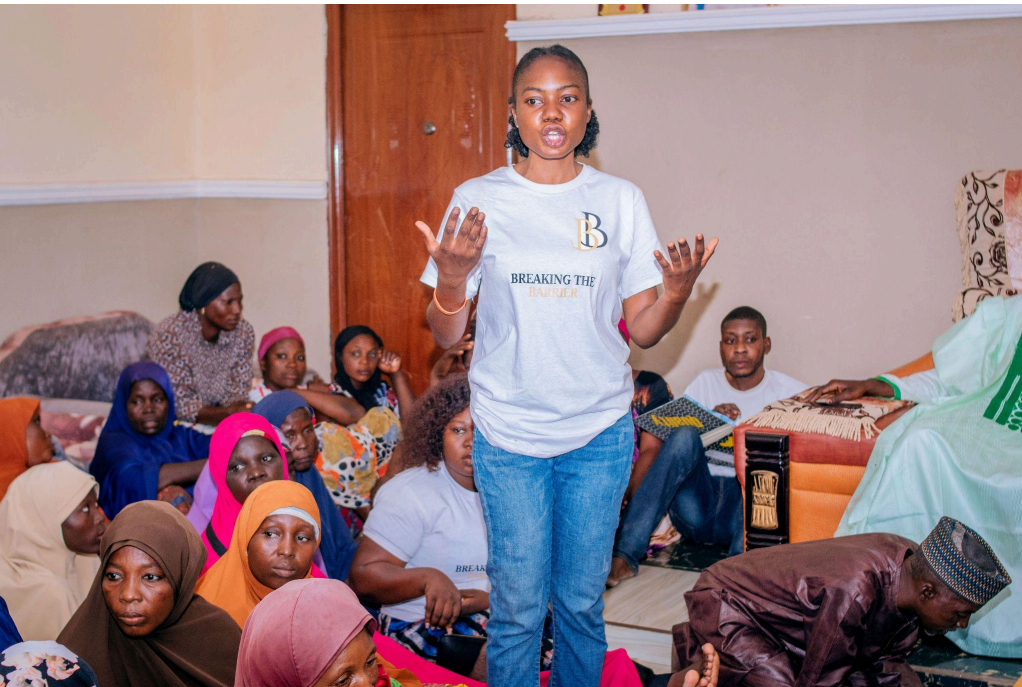
As the Technical Assistant to the Senior Special Assistant to the president on Leadership and Citizenship in Nigeria, I have been involved in national initiatives aimed at youth empowerment, civic participation, and leadership development. In this capacity, I contributed to the creation and execution of programs that have positively affected over 5,000 young people throughout Nigeria, instilling lessons on civic duty, leadership, and nation-building.
One of the most impactful experiences was spearheading the Youth and Tax Project, a nationwide town hall meeting with the Federal Inland Revenue Service. For the first time, young individuals engaged directly with government representatives to discuss tax reform and economic inclusion. This demonstrated that youth don’t need to be instructed to participate; they simply need to be given the opportunity.
A Global Youth Ambassador with Theirworld Organization. Source: Photo courtesy of Lolade Ipele Omoyeni. Used with permission.
As a Global Youth Ambassador with Theirworld, I’ve taken these stories to the international stage advocating for equitable access to education for marginalized children and youth. I’ve also served as a rapporteur under the United Nations OHCHR PROMIS project, contributing to discussions on human rights-based responses to irregular migration and youth inclusion in West Africa.
As Nigerian youth, we stand at a pivotal moment in our history. The crossroads we face today is not merely about our survival; it’s a call for systemic change. If we genuinely aspire to redefine our future and reshape our nation, we must take proactive steps toward meaningful transformation. Our voices matter. it's time for us to be more than just voters. We must insist on our inclusion not only in the electoral process but also as policymakers. By pushing for a seat at the table, we can influence decisions that affect our lives and the future of our country. Engaging in governance will empower us to advocate for our rights and the needs of our communities. Moreover, volunteerism is a vital avenue for creating change, yet many grassroots efforts go unrecognized and unsupported. We need to establish structured programs that provide support and acknowledgment for youth leaders making a difference in their communities. By institutionalizing youth volunteerism, we can create a robust network of young individuals committed to driving progress and inspiring others. Moreover, innovation is essential for advancement, necessitating investment in youth-led initiatives, encompassing educational programs and technology-driven solutions. Financing these innovative concepts not only fosters creativity and entrepreneurship but also enables young individuals to address the urgent challenges confronting our society.
The notion that Nigerian youth are lethargic is not only erroneous but also hazardous. It disregards the experiences of numerous young individuals who are creating, leading, and innovating, frequently without support from the system. However, we don't need to seek approval to take action. I certainly didn't. We need to take action through civic engagement, volunteerism, and amplifying our voice.